




Are you a you? Have you tried different ways to engage your audience and stand out in your industry? Didn’t get a better result? Are you looking for a marketing strategy? Do you want to know the differences between the two blogs? Then, you are in the right place. Here, we will deep dive into the long-form content to unlock the business potential.
Here, we will discuss long and short content, which is better, why you need both content, etc. So, without further delay, let’s jump into content writing and explore the essentiality of long and short content writing.
What Is Short Content?
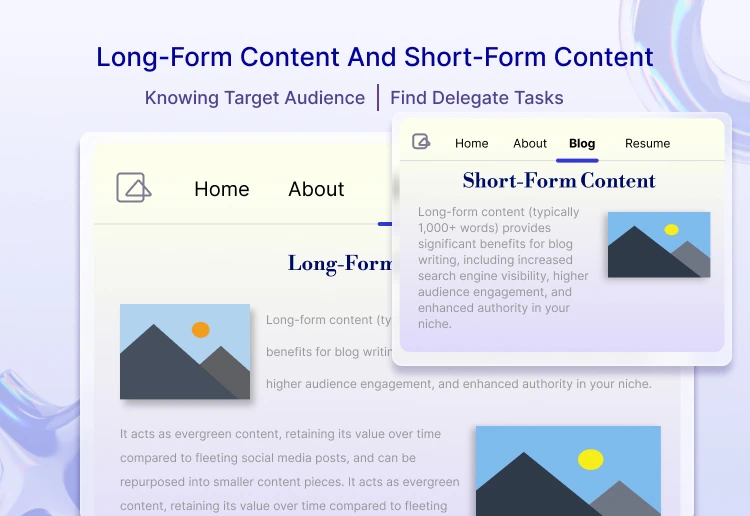
Short content is snappy and to the point. Short-form content is best when you want to share an opinion, pass along important news or updates, etc. Short content is a great way to get new audience members. Also, it helps the business to generate high lead values.
📌Generally, the short-form content is under 1000 words, such as – short blog posts, social media posts, short emails, etc.
Short content is effective with the leads who already know about the business and even the customers who already trust the brand and the services.
What Is Long-Form Content?
Long contents are detailed articles that offer in-depth information on various subjects. Long content is longer than normal content in length. Is there any word count to determine the blog? Yes. Blogs that have more than 2000 to several thousand words are long. Whenever an audience needs detailed information on any topic, they search for long blogs. Long content may include ebooks, long blog posts, whitepapers, webinars, product or service releases, etc.
Long contents are detailed articles that offer in-depth information on various subjects. Long content is longer than normal content in length. Is there any word count to determine the blog? Yes. Blogs that have more than 2000 to several thousand words are long. Whenever an audience needs detailed information on any topic, they search for long blogs. Long content may include ebooks, long blog posts, whitepapers, webinars, product or service releases, etc.
Long Content vs Short-Form Content: Which One Is Better
Before entering it, you must know the SEO. So what is it? You or you may think this kind of marketing isn’t relevant to your audience, but put that thought to rest. Nowadays, most people find things online, so if you want to reach an online audience, you must deliver stunning content to search engines. You need a marketing strategy before reaping the benefits of well-written content.
Which Content Length Is Better?
Many people claim that long-form content performs better. The long content gives brands more room to incorporate keywords and SEO best practices so the content ranks higher in search engine results. Additionally, in 2011, Google launched Google Panda, which was an algorithm that sought out the low-quality from high-quality websites that show in the search results.
However, it is not a fixed case. Nowadays, short-form video content has been taking over the internet. Small-form video content takes about 82% of internet traffic, and a person watches around 100 minutes of video daily (on average). Professional content writers can help you to understand it better.
Why You Need Both Long And Short-Form Content To Get Maximum Engagement
You need both content to enhance engagement. Both contents have their specific benefits to boost business performance. Let’s see how the marketing strategy for both contents works.
Benefits Of Long-Form Content
Long blogs are detailed articles that offer in-depth information on various subjects. Whenever an audience needs detailed information on any topic, they search for long content. Below, we have discussed the benefits of long content.
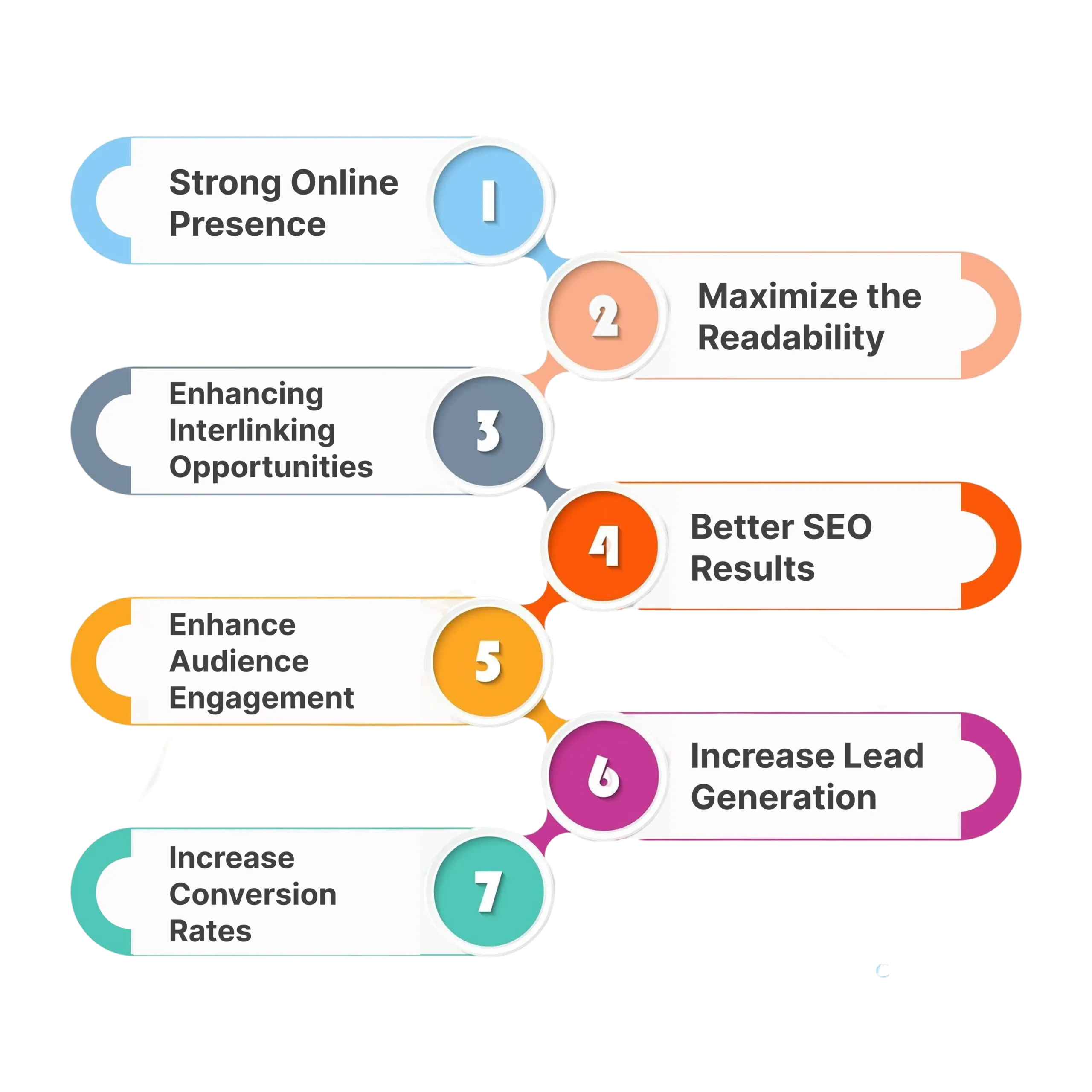
1. Strong Online Presence
Long content can help markets create a strong online presence. Long blogs help the brand to become a more trusted and credible source of information, leading to higher website traffic. Additionally, long blogs delve deep into specific topics, offering more valued content than shorter blogs.
2. Maximize the Readability
A long blog encourages raiders to stay on the page for an extended period. The dwelling time of one or two minutes is considered good because it suggests that the content aligns with the visitor’s interest and has consumed the content.
3. Enhancing The Interlinking Opportunities
Long blogs offer additional opportunities to link to other crucial content on your site. It can increase the site’s user experience by enhancing navigation. High-quality, comprehensive long-form blog writing can consistently outperform shorter blog posts and articles.
4. Better SEO Results
Long-form or SEO blogs rank higher than short-form content in search results than blog posts with lower word count. Search engines, such as Google, yahoo show better search engine results for long blogs, because the topic elaborately covers the long long. Additionally, when you develop long content, you can implement more effective keywords that rank in the search engine results.
5. Enhance Audience Engagement
Long blogs are essential for engaging audiences as they offer information. It also helps maintain the audience’s attention. By delivering information, you can build a connection with the audience. This content marketing strategy fosters trust and engages the audience. As long-from blog writing can get more comments and shares compared to shorter blogs, it can build up the interaction between you and the audience.
6. Increase Lead Generation
Long-form content can help you in lead generation. You can include magnets to attract new audiences and retain them. This way, a potential customer can sign up to become a lead for the business.
7. Increase Conversion Rates
Long content can lead to higher conversion rates. Particularly, when you skillfully structure the persuasive elements and incorporate CTAs (Clear calls to Action). So, well-structured long content can be a cornerstone of your conversation strategy, leading readers to turn into loyal leads.
Benefits of Short-Form Content
Till this point, we have discussed the benefits of long-form content. Now let’s explore the benefits of short-form content. And why you need both contents to achieve market success.
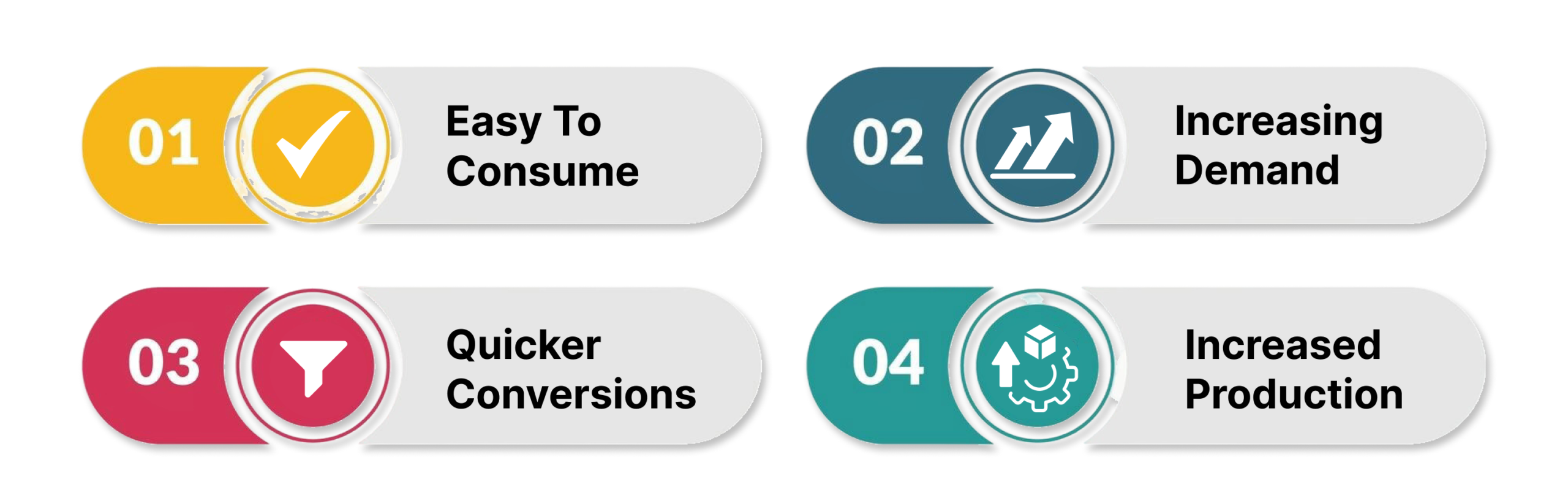
1. Easy To Consume
Shorter content underrated the commitment level and encouraged readers to quit around the end. Shorter content could be a simple way to improve the readership and engagement metrics, like bounce rates.
2. Increasing Demand
Shorter content, such as video content, has an increasing demand. Audiences share videos twice as much as any other form of content. According to Google, the watch time of shopping-related videos on YouTube increased. You can create shorter video content that can connect to the audiences better, leading to higher engagement.
3. Quicker Conversions
Audiences consume short messages in less time, which helps them connect with the content easily. Audiences always look for straight straightforward answers, which is less time-consuming. By creating short content, you can turn loyal readers into leads.
4. Increased Production
Here is another benefit of short-form content. Short content doesn’t take time to create long-form content. Most content you love to create short content because it can free up time to focus on marketing strategies, such as promotions and distribution.
As you can see, both short and long content have their benefits. A well-structured content with 1000 words can still be ranked highly on Google. Aside from this, another major consideration is user intent. You must consider why the audience searches keywords, looking at different channels, reading content, etc.